← Back to Senior Dignity
Best Slippers for Elderly Fall Prevention
Bottom Line
Seven non-slip slippers across five categories — arch-support, memory foam, closed-heel, adaptive, and diabetic-friendly — that prevent the most common indoor fall cause: slick flooring.
Quick Verdict
- Top Pick: Skechers Go Walk Arch Fit (under $50) — podiatrist-certified arch support with rubber outsole and closed back
- Best Value: RockDove Memory Foam (under $50) — essential safety features at the lowest price
- Best For: Diabetics — LongBay Diabetic Slippers (under $50) with seamless interior and extra-wide toe box
Bare feet on hardwood. Socks on tile. That's the cause of more senior falls than any other single factor in the home. Not stairs, not rugs, not bathtubs — floors, and the footwear (or lack thereof) that touches them.
The CDC's STEADI program identifies inappropriate footwear as a primary modifiable fall risk factor. NIH research on footwear and falls found that indoor footwear choice has a greater impact on fall risk than outdoor footwear — because seniors spend 80%+ of their time indoors, and indoor surfaces (hardwood, tile, linoleum) are slicker than outdoor surfaces (asphalt, concrete, grass).
The fix is simple, cheap, and immediate: non-slip slippers with rubber outsoles and closed-heel designs. Not socks. Not bare feet. Not open-backed scuffs that slide off during a shuffle. Proper slippers.
This guide covers seven slippers across five categories: arch-support, memory foam, closed-heel, adaptive, and diabetic-friendly. Each serves different foot conditions, mobility levels, and comfort preferences.
Last updated: August 2026.
 ►
► Watch: These Anti-Fall Shoes Are a LIFE CHANGER
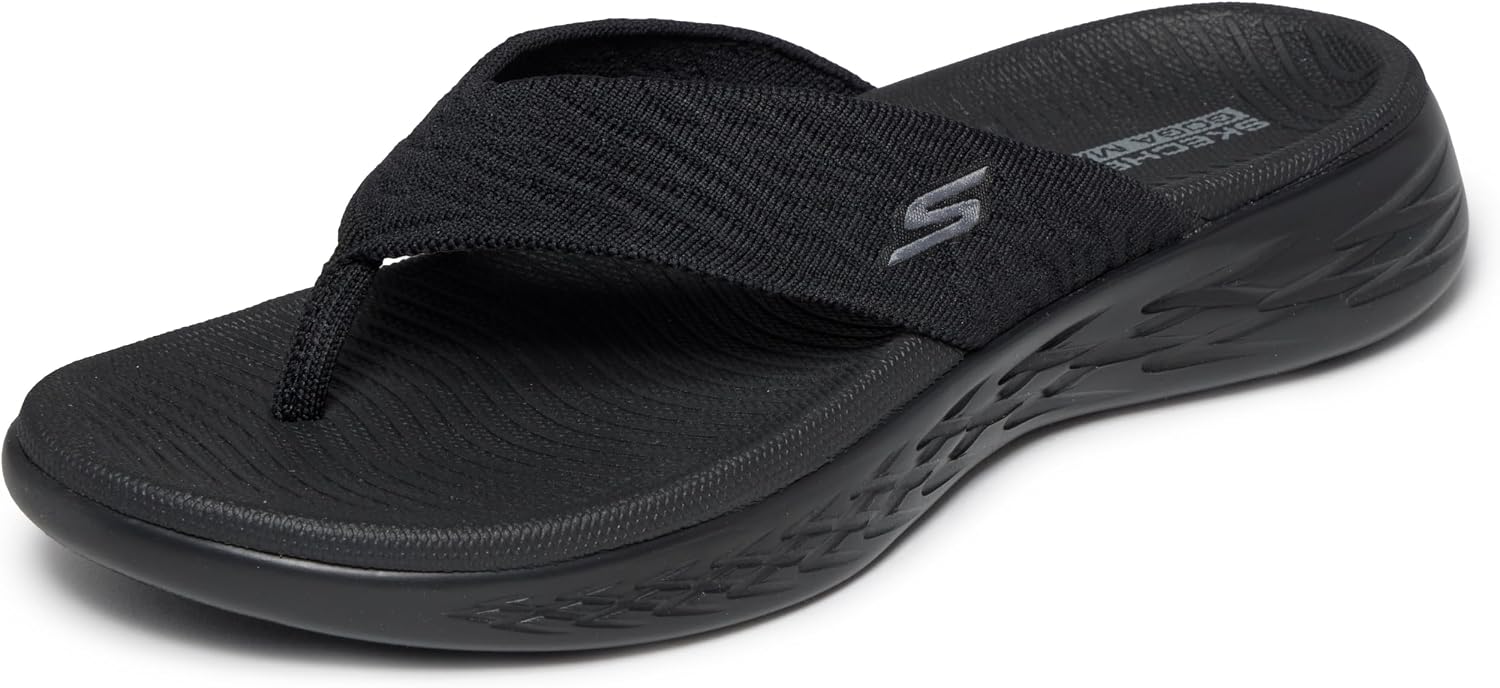
1. Skechers Go Walk Arch Fit Slippers — Best Overall
Best Overall Skechers Go Walk Arch Fit Slippers
Closed-back slippers with Skechers' Arch Fit insole and rubber outsole — podiatrist-certified arch support prevents foot fatigue that leads to balance loss on hardwood and tile.
Price: under $50 | Rating: highly rated (widely reviewed)
SHOP Skechers built the Go Walk line on a running-shoe platform, then converted it to a slipper. The result is a slipper with the structural support of a shoe — arch support, heel counter, lateral stability — and the comfort of house footwear. This matters because most slippers are structurally identical to slippers from the 1950s: flat foam, no arch, no heel support. They're comfortable for sitting and dangerous for walking.
The Arch Fit insole is the key feature. It's certified by podiatrists (not just "podiatrist-designed" — actually certified through clinical testing) to distribute weight across the foot's three arches: medial, lateral, and transverse. For seniors with flat feet, plantar fasciitis, or arthritis in the midfoot, this support reduces the foot fatigue that accumulates over a day of indoor walking and eventually manifests as a shuffle, a stumble, or a fall.
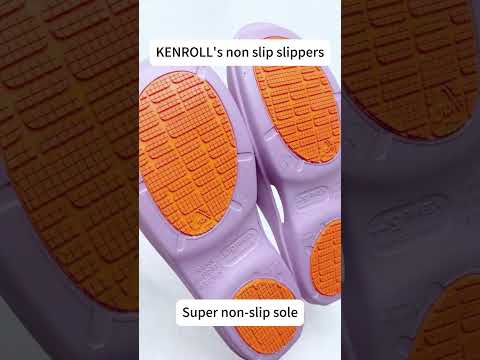
The rubber outsole has a multi-directional tread pattern that grips hardwood, tile, and linoleum. The closed-back design means the slipper stays on during shuffling gaits — a critical feature, since the slide-off-and-trip scenario is one of the most common slipper-related fall mechanisms.
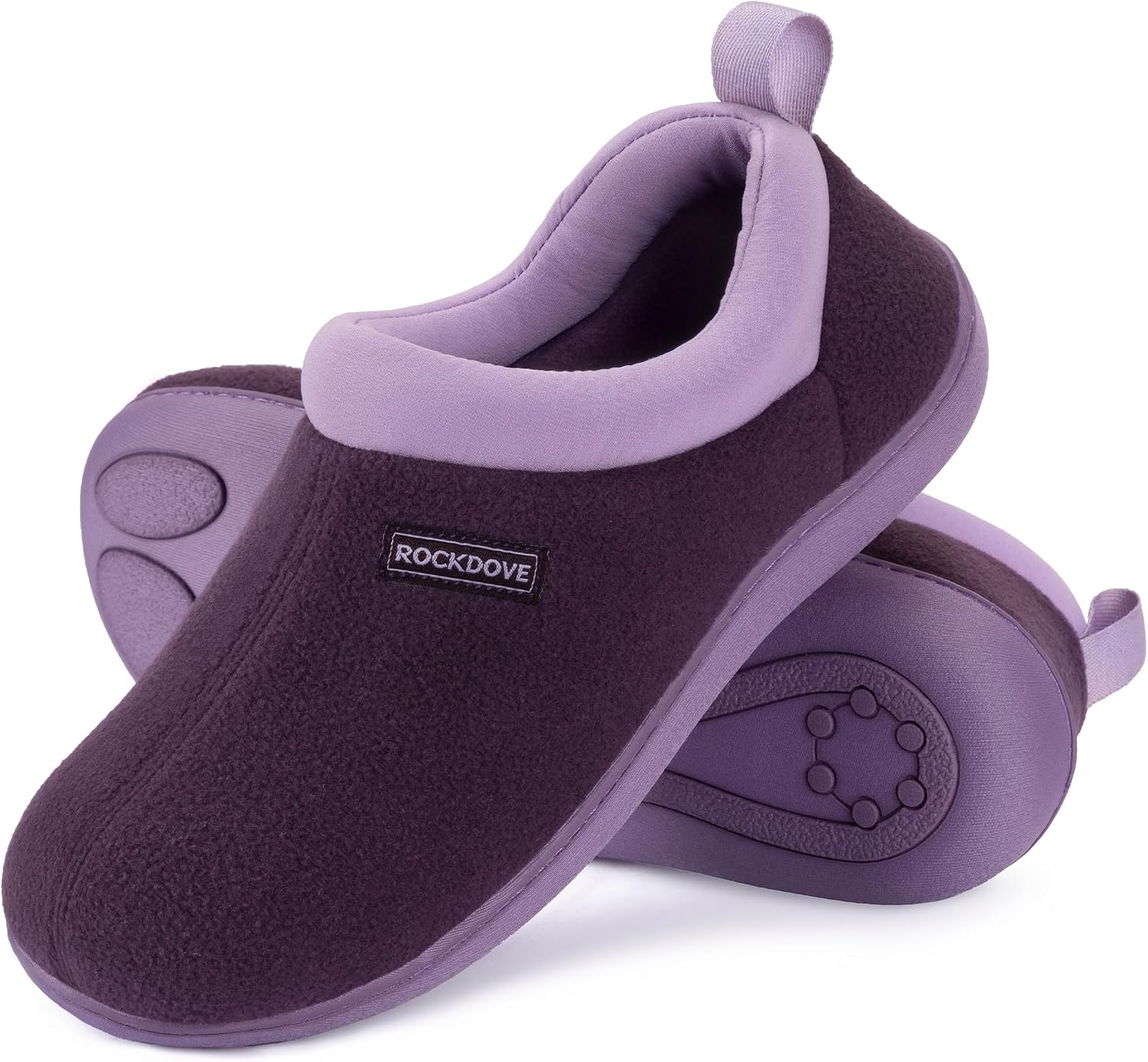
2. RockDove Two-Tone Memory Foam Slipper — Best Value
Best Value RockDove Two-Tone Memory Foam Slipper
Budget-friendly closed-back slipper with memory foam insole and rubber outsole — the essential safety features (closed heel, non-slip sole) at the lowest price point.
Price: under $50 | Rating: well-reviewed (widely reviewed)
SHOP Not every senior needs podiatrist-certified arch support or adaptive closure systems. For many, the needs are simple: a slipper that stays on, grips the floor, and doesn't cost under $50. The RockDove is that slipper.
It has the two non-negotiable features for senior safety: a closed back (stays on during shuffling) and a rubber outsole with tread (grips slick floors). The memory foam insole provides cushioning without structural support — adequate for users without significant foot issues. The upper is a breathable knit that accommodates swollen feet without constriction.
At under $50, the RockDove is the budget option that doesn't compromise on the safety-critical features. It lacks arch support and won't last as long as the Skechers (expect 6-9 months vs. 12-18 months), but the safety features are present from day one. For a senior on a fixed income, this is the minimum viable product for indoor fall prevention.
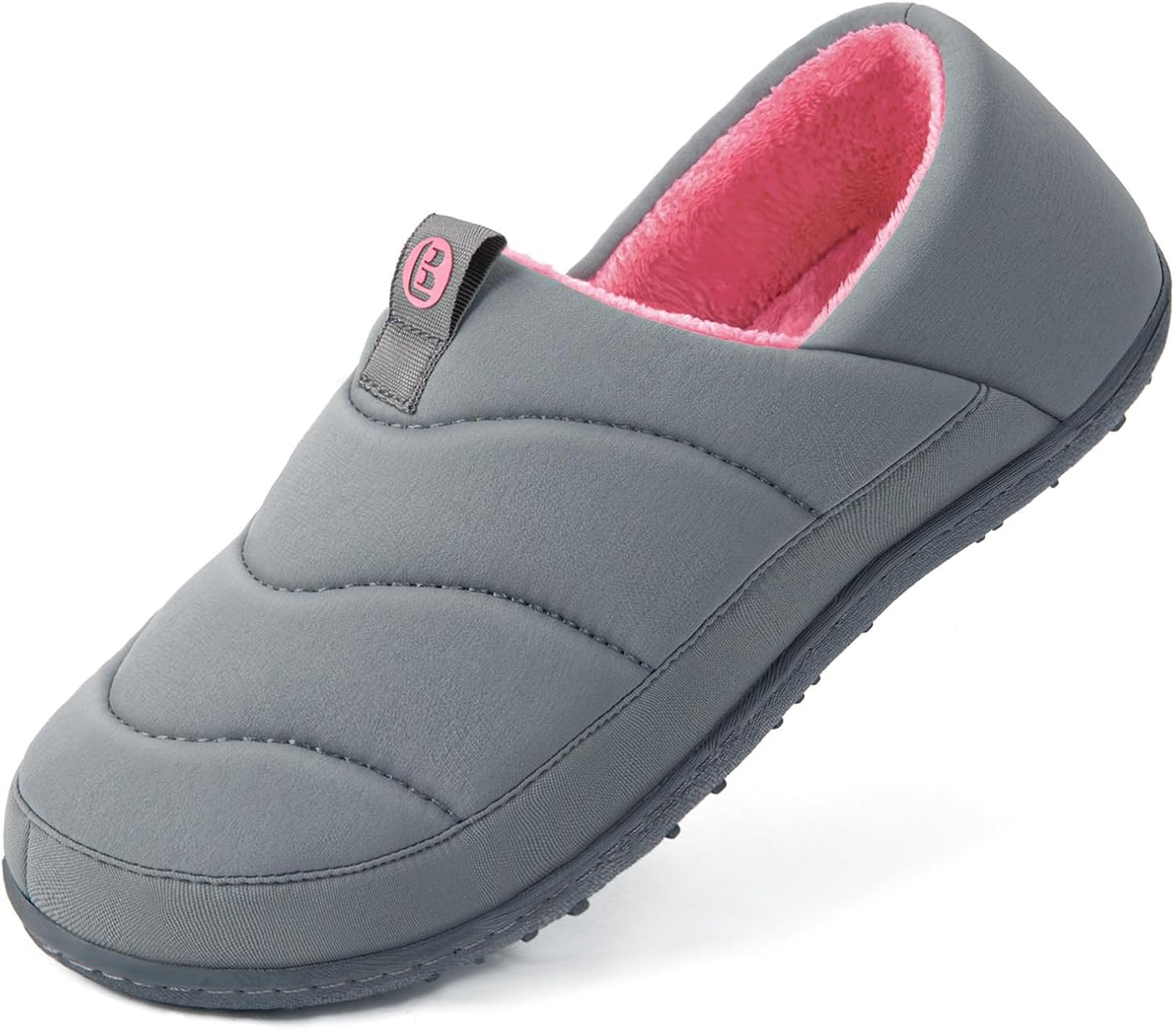
3. LongBay Memory Foam Closed-Heel Slippers — Best for Warmth
Warmest LongBay Memory Foam Closed-Heel Slippers
Fleece-lined closed-back slippers with thick memory foam insole — provides warmth for poor circulation and cold sensitivity while maintaining non-slip rubber outsole safety.
Price: under $50 | Rating: well-reviewed (widely reviewed)
SHOP Many seniors have cold feet — not metaphorically. Peripheral artery disease, diabetes, neuropathy, and simply reduced circulation from inactivity all cause chronically cold feet. Cold feet are not just uncomfortable; they cause the person to tuck their feet under blankets, heaters, or furniture, which creates tripping hazards when they stand up. Cold feet also reduce sensation, which means the proprioceptive feedback that tells the brain where the foot is in space becomes unreliable — a direct contributor to falls.
The LongBay solves the warmth problem with a thick fleece lining that extends from the toe box through the heel and ankle. The lining is synthetic (not wool), which means it's machine-washable and doesn't cause itching. The memory foam insole is 15mm thick — thicker than most slippers — which provides cushioning for arthritic joints.
The rubber outsole is textured with a waffle pattern that grips hardwood and tile. The closed-back design stays secure during shuffling. The only weakness is arch support — the memory foam compresses flat under body weight, providing no structural support. For users who need both warmth and arch support, add a aftermarket insole (Superfeet or Dr. Scholl's) to the LongBay.
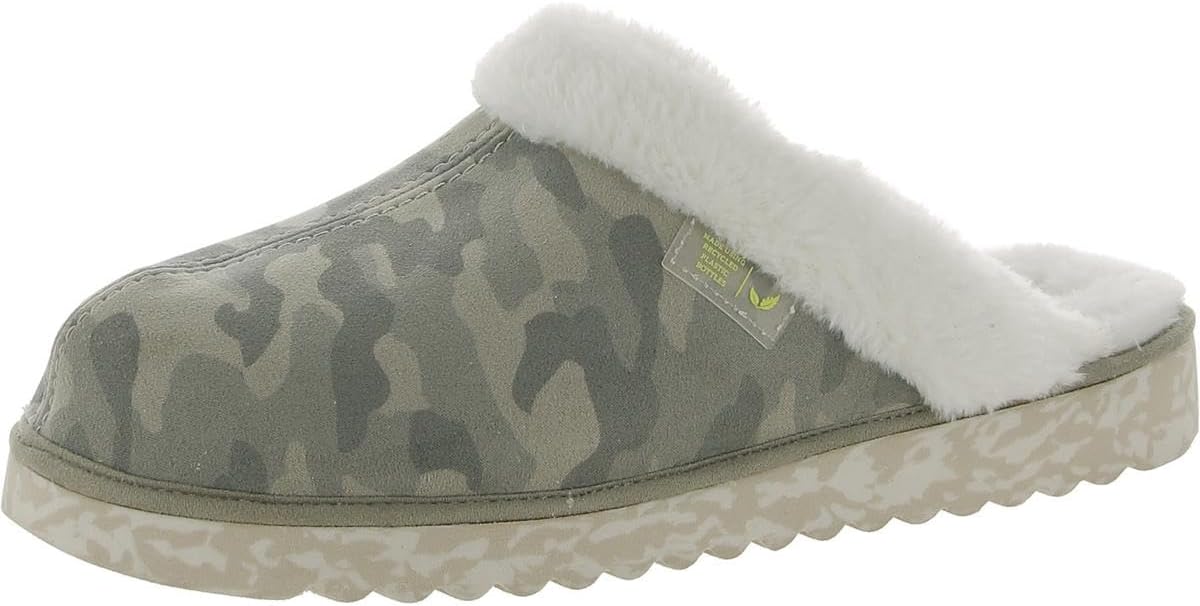
4. Dr. Scholl's Supportive Slippers
Best for Foot Pain Dr. Scholl's Supportive Slippers
Slipper with Dr. Scholl's insole technology and shock-absorbing heel cup — designed for plantar fasciitis, heel spurs, and arthritis pain while maintaining non-slip safety.
Price: under $50 | Rating: highly rated (widely reviewed)
SHOP Plantar fasciitis affects approximately 1 in 10 adults over 60, and the morning first-step pain it causes is severe enough to change gait patterns — the senior walks on the outside of the foot to avoid loading the arch, which destabilizes the ankle and increases fall risk. A slipper that supports the plantar fascia reduces morning pain and the compensatory gait it causes.
Dr. Scholl's built this slipper around their massaging gel insole, which has a raised heel cup and arch support zone. The gel insert absorbs the heel-strike impact that aggravates plantar fasciitis and heel spurs. The insole is removable, which means it can be replaced with a custom orthotic if the user has prescription insoles from a podiatrist.
The rubber outsole is thicker than most slippers (about 1 inch at the heel), which provides elevation without instability. The upper is a breathable microfiber that accommodates bunions and hammer toes without pressure. The closed-back design stays secure, and the wide toe box prevents toe compression that worsens neuropathy symptoms.
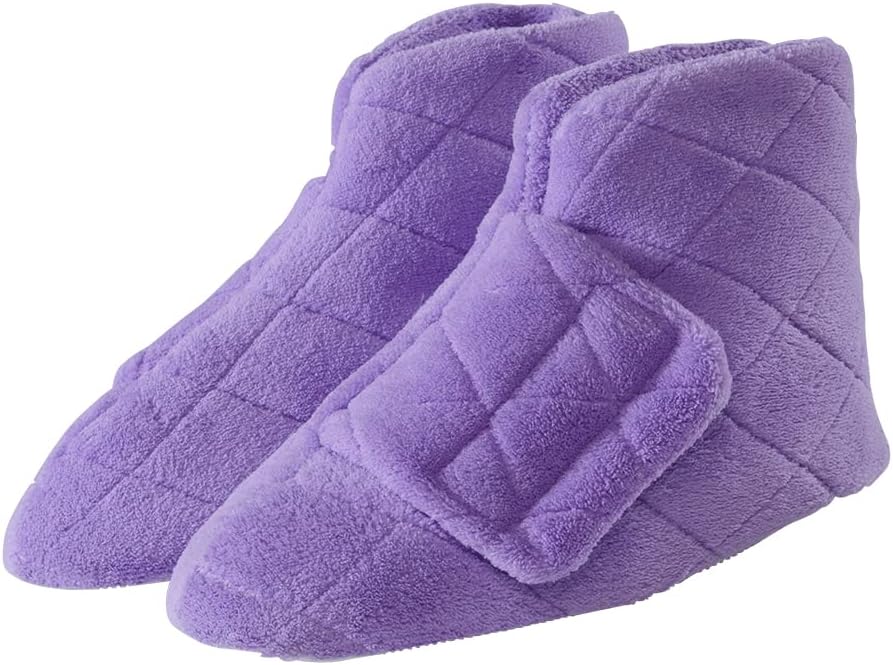
5. Silverts Adaptive Open-Back Slippers — Best for Swelling
Adaptive Silverts Adaptive Open-Back Slippers
Adaptive slippers designed for swollen feet and edema — open-back design accommodates volume changes without constriction. Non-slip sole, extra-wide fit, machine-washable.
Price: under $50 | Rating: well-reviewed (widely reviewed)
SHOP Edema (fluid retention causing foot and ankle swelling) affects an estimated 25% of seniors, particularly those with heart failure, kidney disease, or venous insufficiency. Swollen feet don't fit standard slippers — the slipper becomes a tourniquet, restricting circulation and worsening the edema. The typical response is to stop wearing slippers entirely, which means bare feet or socks on slick floors.
Silverts designed their adaptive slippers specifically for this scenario. The extra-wide toe box and open-back design accommodate foot volume that changes throughout the day (feet are typically smallest in the morning and largest in the evening). The adjustable Velcro closure at the instep allows the user to customize the fit without constriction — tighten in the morning when the foot is small, loosen in the evening when it's swollen.
The open-back design is a deliberate trade-off: it makes the slipper easier to put on for users who can't bend to reach their feet, but it means the slipper can slide off during shuffling. The Velcro instep strap partially mitigates this by securing the forefoot, but for active walkers, a closed-back model is safer. Silverts is best for users who are primarily seated or who need help dressing.
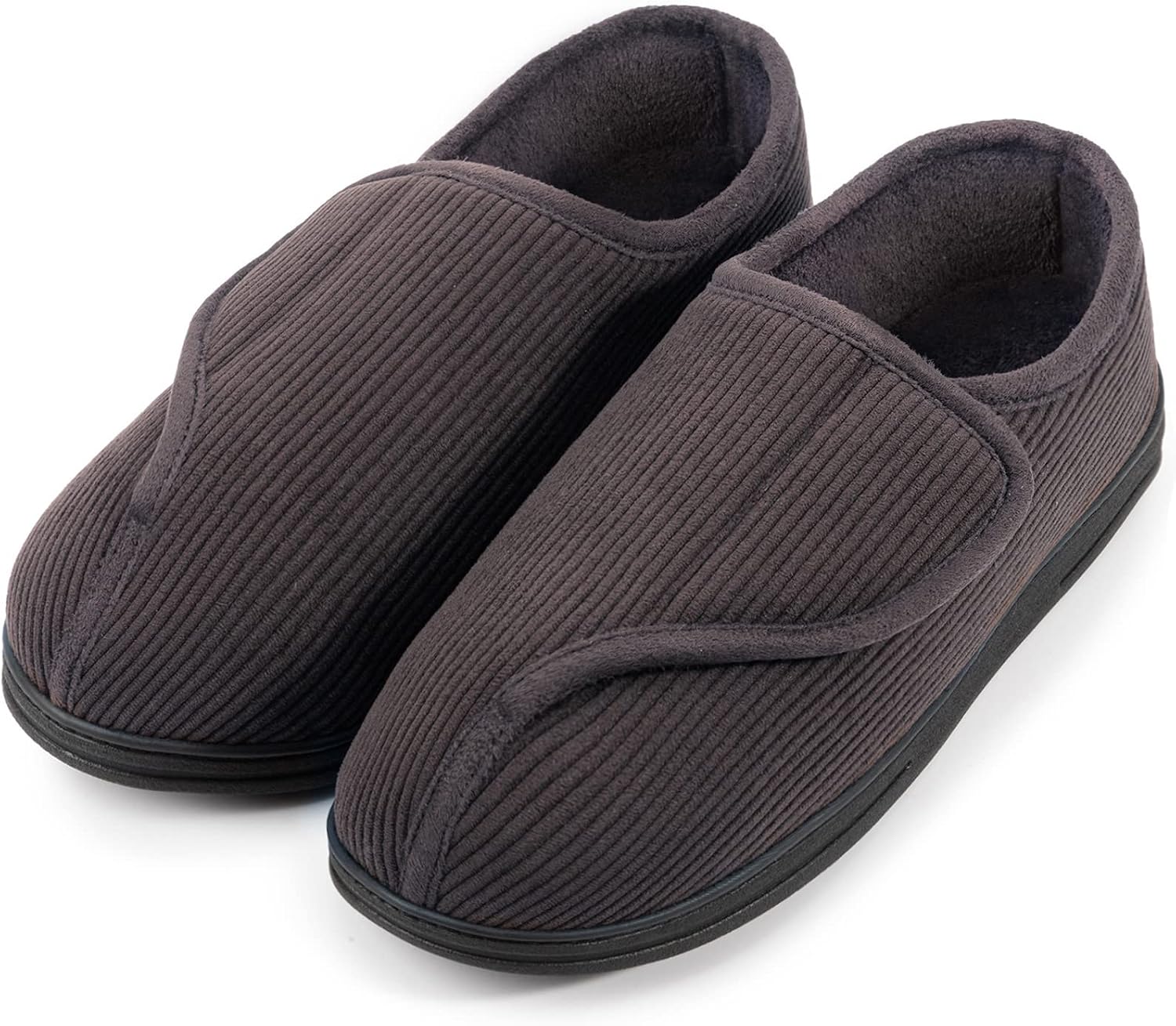
6. LongBay Diabetic Slippers — Best for Diabetics
Diabetic-Friendly LongBay Diabetic Slippers with Wide Toe Box
Diabetic-friendly slippers with seamless interior, extra-wide toe box, and non-binding upper — prevents pressure points that can ulcerate in diabetic neuropathy. Non-slip rubber outsole.
Price: under $50 | Rating: well-reviewed (widely reviewed)
SHOP Diabetic neuropathy reduces sensation in the feet, which means a seam, wrinkle, or pressure point that would be painful (and therefore noticed and corrected) in a healthy foot goes unnoticed. The pressure continues, the skin breaks down, and a diabetic foot ulcer forms — a complication that leads to infection in 50% of cases and amputation in 20% of infected ulcers.
Diabetic slippers are designed to eliminate every pressure point. The LongBay Diabetic has a seamless interior (no stitching ridges against the skin), a non-binding upper (the top of the slipper doesn't compress the foot), and an extra-wide toe box (toes aren't squeezed together, which causes friction ulcers between toes). The memory foam insole is soft enough to distribute pressure evenly without creating focal pressure points.
The rubber outsole provides the same non-slip grip as the standard LongBay, with the same closed-back design. The key difference is the interior: a diabetic slipper is engineered like a medical device, not a comfort product. For a senior with diabetes, this is the only safe indoor footwear option.
The CDC's diabetic foot care guidelines specifically recommend seamless, non-constrictive footwear for all diabetics, including indoors.
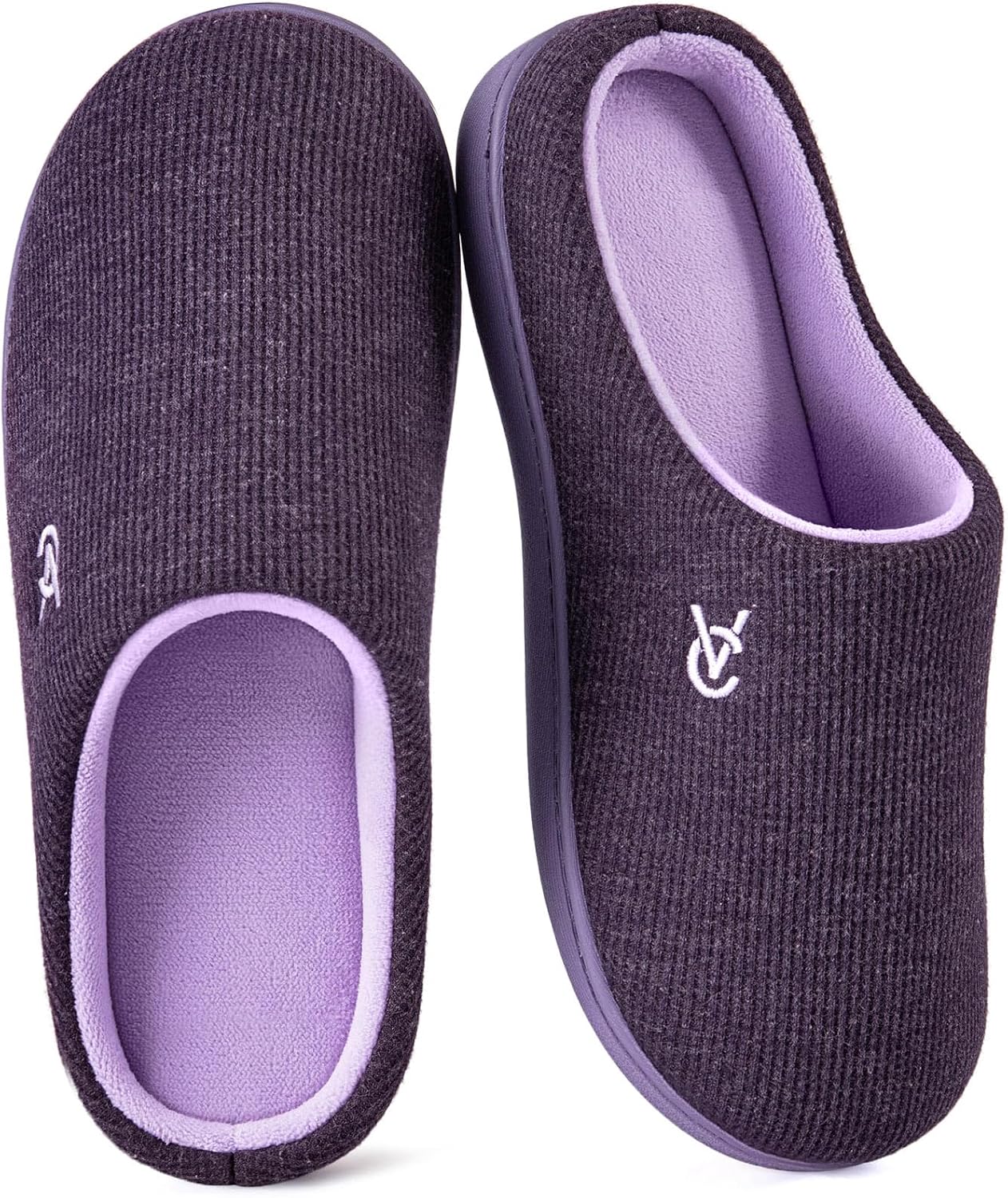
7. VeraCosy Two-Tone Knit Slippers
Best Wide Fit VeraCosy Two-Tone Knit Slippers
Wide-fit closed-back slipper with thick rubber outsole — accommodates bunions, wide forefeet, and orthotic inserts. Firm heel counter for lateral stability.
Price: under $20 | Rating: highly rated (widely reviewed)
SHOP Bunions (hallux valgus) affect approximately 35% of adults over 65. A bunion is a bony protrusion at the base of the big toe that widens the forefoot, making standard-width slippers excruciatingly painful. The typical response is to buy slippers two sizes too large, which creates heel slip, which creates a fall risk.
The UXZDX is built on a wide last (the foot-shaped form the slipper is constructed around) that accommodates bunions and wide forefeet without sizing up. The forefoot area is approximately 15% wider than standard slippers, which eliminates the pressure on the bunion that makes walking painful. The heel remains standard width, which means the heel counter still grips — no heel slip, no lateral instability.
The removable insole accommodates custom orthotics, which many bunion sufferers have from their podiatrist. The rubber outsole has a deep tread pattern that maintains grip even as the tread wears. The closed-back design is secure during shuffling. At under $50, it's the most affordable wide-fit option with a rubber outsole.
How to Choose Non-Slip Slippers
The Four Non-Negotiables
Every senior slipper must have these four features, regardless of foot condition or budget:
- Closed back — stays on during shuffling, prevents the slide-off-and-trip
- Rubber outsole with tread — grips hardwood, tile, and linoleum
- Firm heel counter — prevents the foot from rolling laterally
- Adequate toe room — toes that are compressed change gait and destabilize
Match to Foot Condition
- Normal feet: Skechers Arch Fit or RockDove
- Plantar fasciitis/heel pain: Dr. Scholl's Supportive
- Cold feet/poor circulation: LongBay Fleece
- Edema/swelling: Silverts Adaptive
- Diabetes: LongBay Diabetic (seamless interior is non-negotiable)
- Bunions/wide feet: UXZDX Wide Fit
Replace Regularly
Slipper tread wears down invisibly. The rubber looks fine but has lost its grip. Test quarterly: place the slipper on a hardwood floor and push sideways with your foot. If it slides more than an inch, replace it. For daily wearers, plan on replacement every 6-12 months.
Pair with Other Fall Prevention
Slippers prevent floor falls. For bathroom falls, add grab bars and a shower seat. For nighttime falls, add motion sensor lights and bed rails. For the full system, see our Aging in Place Guide and the Senior Dignity hub.
What Makes a Slipper Non-Slip for Elderly Fall Prevention?
Non-slip slippers for elderly users rely on rubber outsoles with tread patterns — the same friction principle as outdoor shoes. Silicone grips and textured foam soles provide less traction and wear down faster.
- Rubber outsoles: Natural and synthetic rubber provide the highest friction on hardwood, tile, and linoleum. Look for multi-directional tread patterns.
- Silicone grip dots: Found on grip socks and low-end slippers. Silicone wears smooth within 3-6 months and loses effectiveness on wet surfaces.
- Tread pattern depth: Deeper grooves (2mm+) channel water and dust away from the contact surface, maintaining grip on damp bathroom floors.
- Full-sole coverage: Slippers with rubber covering the entire foot bottom grip better than partial-sole designs that leave the heel or arch exposed.
Anti-slip slippers for elderly fall prevention should always have a full rubber outsole — not just grip dots or textured foam.
What Makes a Slipper Supportive for Seniors?
Supportive slippers for elderly users need arch support, a firm heel counter, and adequate midsole firmness. These features prevent the foot from rolling laterally and reduce fatigue-related balance loss.
- Arch support: Raised medial arch support distributes weight across the foot's three arches. Podiatrist-certified designs (like Skechers Arch Fit) provide the highest level of structural support.
- Heel counter: A firm cup around the heel prevents sideways rolling. Press the back of the slipper — if it collapses easily, it offers no lateral support.
- Midsole firmness: Memory foam feels comfortable but compresses flat under body weight, providing no structural support. Firm EVA or polyurethane midsoles maintain shape longer.
- Snug fit: A slipper that's too loose shifts on the foot during walking. Closed-back designs and adjustable closures maintain a secure fit throughout the day.
Easy Slip-On Slippers for Elderly: Features to Look For
The best house slippers for elderly to prevent falls combine easy slip-on design with secure fit. Look for wide openings, adjustable closures, and closed-back designs that stay on without bending down.
- Wide opening: A wider mouth lets the foot enter without bending to pull the slipper on. Look for knit or stretchy uppers that accommodate the foot shape.
- Adjustable closures: Velcro instep straps allow custom fit for swelling or bandages. They also let caregivers fasten the slipper without the senior bending.
- Closed-back design: Stays on during shuffling gaits. Open-back scuffs slide off easily and create a tripping hazard.
- Lightweight construction: Heavy slippers cause foot drag, which catches on thresholds and rugs. Under 10 ounces per pair is ideal for seniors with weak dorsiflexion.
- Non-slip rubber outsole: The single most important feature. No rubber outsole means no fall prevention, regardless of how comfortable the slipper feels.
Comfort slippers for elderly users should never sacrifice safety features for softness — the best options deliver both.
When to Replace Slippers for Elderly Fall Prevention
Replace elderly slippers every 6-12 months for daily wearers. Worn rubber outsoles lose grip invisibly — the tread looks fine but slides on hardwood. Compressed interior foam reduces cushioning and support.
Signs It's Time to Replace
- Slip test fails: Place the slipper on hardwood and push sideways. If it slides more than an inch, the tread is worn.
- Visible smoothing: Outsole tread grooves that have flattened smooth provide minimal friction.
- Interior compression: If you can feel the floor through the insole when standing, the foam has compressed flat.
- Heel counter softens: If the back of the slipper collapses when pressed, it no longer prevents lateral foot rolling.
- Worn lining: Friction wear inside the slipper causes blisters and hot spots that change gait patterns.
Buy two pairs and rotate them — alternating days extends outsole life by allowing foam to decompress between wears.
FAQ
Q: What makes a slipper safe for elderly fall prevention?
A: Closed-heel design (stays on during shuffling), rubber outsole with tread (grips slick floors), firm heel counter (prevents lateral rolling), and adequate arch support (reduces fatigue-related balance loss).
Q: Are grip socks a substitute for non-slip slippers?
A: No. Grip socks lack structural support and the grip dots wear through quickly. Non-slip slippers with rubber outsoles provide significantly more friction and lateral support.
Q: Should seniors wear shoes indoors instead of slippers?
A: For highest fall risk, a supportive athletic shoe provides the best protection. But shoes are less comfortable for all-day wear, reducing compliance. A supportive non-slip slipper is the practical compromise.
Q: How often should elderly slippers be replaced?
A: Every 6-12 months for daily wearers. Test by pushing the slipper sideways on hardwood — if it slides easily, the tread is worn and the slipper is no longer safe.
The Bottom Line
Indoor falls happen on floors, and floors are touched by footwear. Bare feet and socks on hardwood are the equivalent of driving on ice — the surface is fine, the interface is the problem. Non-slip slippers fix the interface for under $50.
My recommendations:
- Best overall: Skechers Arch Fit (under $50) — podiatrist-certified support, rubber outsole, closed back
- Best budget: RockDove (under $50) — essential safety features at the lowest price
- Diabetic: LongBay Diabetic (under $50) — seamless interior, non-binding upper, wide toe box
- Swelling/edema: Silverts Adaptive (under $50) — Velcro closure, extra-wide, accommodates volume changes
Buy two pairs — one for the bedroom, one for the living area — so there's always a pair within reach. And replace them yearly, because worn tread is invisible but deadly.
For the complete fall prevention catalog — bed rails, grab bars, reacher grabbers, medical alert systems, and more — visit our Senior Dignity hub.
Reviewed by Adele, Founder & Senior Gift Curator. Last updated August 2026. This article contains affiliate links and references NIH and CDC research on footwear and falls. See our privacy policy for disclosure details.
Watch & Learn: Video Guides
 ►
► Watch: Best Slippers for Elderly Fall Prevention
 ►
► Watch: Non-Slip Slippers for Seniors Review