← Back to Daily Supplements
3 Best Magnesium Supplements in 2026: Glycinate vs L-Threonate
Magnesium is involved in hundreds of enzymatic reactions in the human body — from ATP energy production to DNA synthesis to muscle contraction. The NIH Office of Dietary Supplements reports that 48% of Americans don't get enough magnesium from food alone. But not all magnesium supplements are created equal: the form you take determines what it does in your body.
The supplement aisle offers magnesium oxide (cheap, poorly absorbed), magnesium citrate (decent absorption, laxative effect), magnesium glycinate (high absorption, calming), and magnesium L-threonate (brain-penetrating, cognitive). This guide compares the three best magnesium supplements on the market — two glycinate forms for systemic health and one L-threonate for brain function.
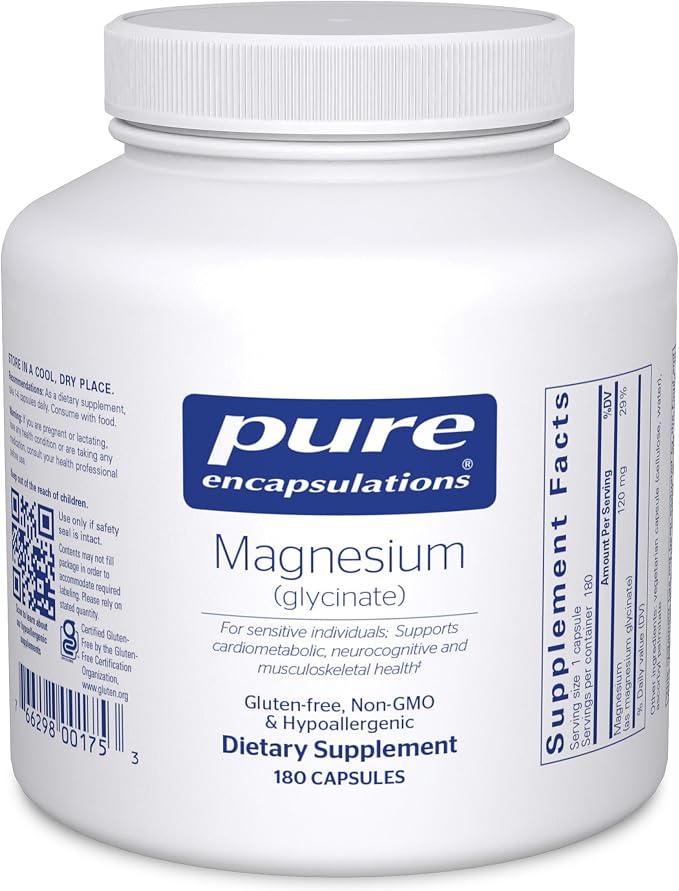
1. Pure Encapsulations Magnesium 180ct — Best Overall
Best Overall
Pure Encapsulations Magnesium 180ct
Pure Encapsulations Magnesium Glycinate provides highly bioavailable magnesium bound to glycine for muscle relaxation, sleep support, and nervous system health. 180 vegetarian capsules, hypoallergenic, gluten-free.
Price: ~$27 | Rating: 4.7/5 (50,746 reviews) | Form: Glycinate | Servings: 180
SHOP
Pure Encapsulations is the brand that functional medicine practitioners recommend most often, and for good reason. Their magnesium glycinate is what it says it is — pure magnesium bound to glycine, with no filler ingredients, no artificial colors, and no common allergens. The hypoallergenic formulation matters because many supplement brands use magnesium stearate, titanium dioxide, or other additives that can cause reactions in sensitive individuals.
The 180-capsule bottle is the bulk option — at 1-2 capsules per day, it lasts 3-6 months. Each capsule provides 100mg of elemental magnesium, so a standard dose of 2 capsules delivers 200mg, which is approximately 50% of the daily value. The NIH recommends 310-420mg per day for adults depending on age and sex, so 2-4 capsules covers the full range.
The glycinate form is what makes this supplement special. Glycine is an inhibitory neurotransmitter — it calms the nervous system. When bound to magnesium, the glycine acts as a chaperone that protects the mineral through the digestive tract and also provides its own calming effect. Research published in Pharmacological Reports showed that magnesium glycinate improved sleep quality and reduced subjective anxiety in adults with mild anxiety symptoms.
At $27 for 180 capsules, the per-capsule cost is $0.15 — reasonable for a practitioner-grade supplement. For someone who wants one magnesium supplement for general health, sleep, and muscle function, this is the one.
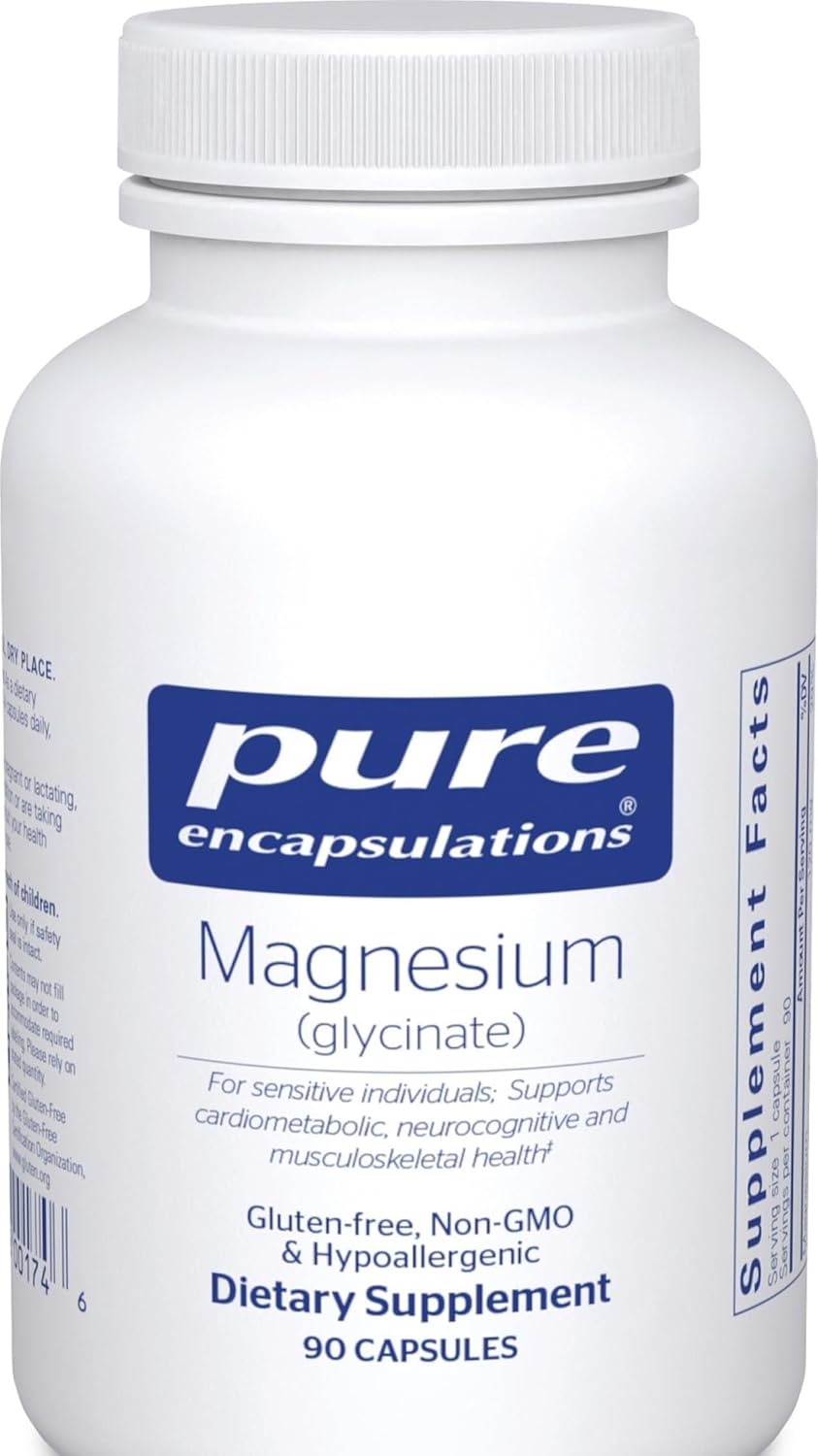
2. Pure Encapsulations Magnesium 90ct — Best Trial Size
Best Trial Size
Pure Encapsulations Magnesium 90ct
Same Pure Encapsulations magnesium glycinate formula in a 90-capsule bottle. Ideal for testing magnesium supplementation or travel. Hypoallergenic, gluten-free, vegetarian.
Price: $27.00 | Rating: 4.7/5 (50,746 reviews) | Form: Glycinate | Servings: 90
SHOP
Same formula, half the capsules. The 90-count bottle is for people who want to try magnesium glycinate before committing to a 6-month supply, or for those who travel and don't want to carry a large bottle. The pricing is slightly higher per-capsule than the 180-count, but the difference is negligible if you're testing whether magnesium glycinate works for you.
The key question for most people: does magnesium glycinate actually work for sleep? The answer is that it depends on your baseline. If you're magnesium-deficient (which 48% of Americans are, per the NIH), supplementing will improve sleep quality. If your sleep issues stem from anxiety, the glycine component provides mild anxiolytic effects. If your sleep issues stem from sleep apnea or other structural issues, magnesium won't help.
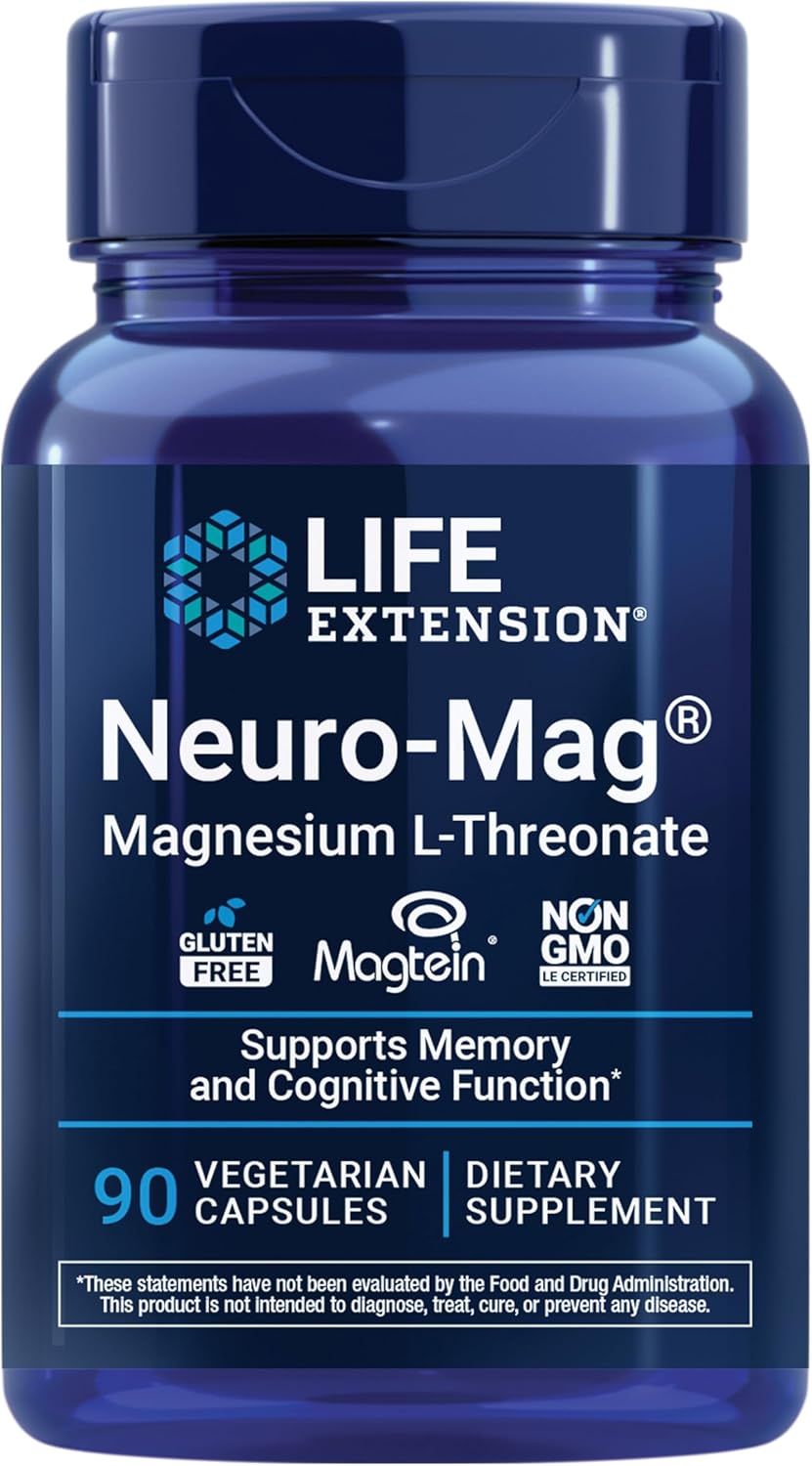
3. Neuro-Mag Magnesium L-Threonate
Best for Memory
Neuro-Mag Magnesium L-Threonate
Life Extension Neuro-Mag provides magnesium L-threonate, the only form shown to cross the blood-brain barrier and improve cognitive function. 90 vegetarian capsules for memory, focus, and brain magnesium levels.
Price: $30.78 | Rating: 4.6/5 (24,428 reviews) | Form: L-Threonate | Servings: 30
SHOP
Magnesium L-threonate is a different beast entirely. While glycinate provides systemic magnesium for muscles and sleep, L-threonate was developed by MIT researchers specifically to cross the blood-brain barrier. Standard magnesium forms (oxide, citrate, glycinate) don't cross the BBB in meaningful amounts — the brain maintains its own magnesium concentration independently of blood levels.
The key study, published in Neuron in 2010, showed that magnesium L-threonate increased hippocampal magnesium levels in rats and improved performance on memory tasks. A subsequent human trial published in the Journal of Alzheimer's & Dementia showed improvements in cognitive function in older adults with mild cognitive impairment.
Neuro-Mag is Life Extension's L-threonate product. Three capsules per serving provide 144mg of elemental magnesium (as magnesium L-threonate) — less total magnesium than glycinate, but the point isn't systemic repletion. The point is delivering magnesium to the brain. The 90-capsule bottle provides 30 servings at a cost of about $1.03 per serving.
For anyone over 50 concerned about cognitive decline, or anyone experiencing brain fog and poor focus, L-threonate is worth the premium price. If you're dealing with muscle tension and pain, glycinate is the better choice — or check out our massage gun guide for physical recovery options.
Glycinate vs L-Threonate: Which Do You Need?
For Sleep
Magnesium glycinate is the clear winner for sleep. The glycine component acts as an inhibitory neurotransmitter, calming the nervous system. L-threonate may improve sleep indirectly by reducing brain magnesium deficiency, but glycinate is the direct calmative. Take 200-400mg elemental magnesium as glycinate, 30-60 minutes before bed.
For Muscle Tension
Glycinate again. Magnesium is a calcium channel antagonist in muscle tissue — it allows muscles to relax after contraction. Systemic magnesium repletion with glycinate is the standard approach. You can also pair it with a neck massager for physical relief of tension.
For Memory and Cognition
L-threonate is the only form with clinical evidence for cognitive enhancement. If brain fog, memory lapses, or difficulty focusing are your primary concerns, L-threonate's ability to raise brain magnesium levels makes it the evidence-based choice. Many people also pair it with other nootropic supplements like Alpha GPC or Lion's Mane.
For General Health
Glycinate. The NIH recommends 310-420mg/day of elemental magnesium for adults. Most people get 200-250mg from food. A daily glycinate supplement (200-400mg elemental) fills the gap and supports the 300+ enzymatic reactions that depend on magnesium — from bone mineralization to blood pressure regulation to glucose metabolism.
Dosage and Safety
The NIH sets the tolerable upper intake level (UL) for supplemental magnesium at 350mg/day for adults. This means you can get additional magnesium from food (spinach, pumpkin seeds, almonds, dark chocolate), but should not exceed 350mg from supplements. Doses above 350mg may cause diarrhea (magnesium draws water into the intestines). Individuals with kidney disease should not take magnesium supplements without medical supervision — the kidneys regulate magnesium excretion, and impaired kidneys can lead to accumulation and toxicity.
FAQ
What is the most absorbable form of magnesium?
Magnesium glycinate has better absorption compared to magnesium oxide. L-threonate was developed specifically to cross the blood-brain barrier, which other forms cannot do in meaningful amounts.
Should I take magnesium glycinate or L-threonate?
For sleep and muscle relaxation, glycinate. For memory and cognitive function, L-threonate. Many people take both — glycinate at night for sleep, L-threonate in the morning for cognition.
What is the best magnesium supplement for sleep?
Magnesium glycinate, 200-400mg elemental, 30-60 minutes before bed. The glycine component itself has calming properties shown to improve sleep quality.
Can you take too much magnesium?
Yes. The UL for supplemental magnesium is 350mg/day for adults. Above this, diarrhea and cramping are common. Above 5,000mg, toxicity occurs. Consult your doctor if you have kidney disease.
← Back to Daily Supplements